Erik Brooks · 2 September 2026
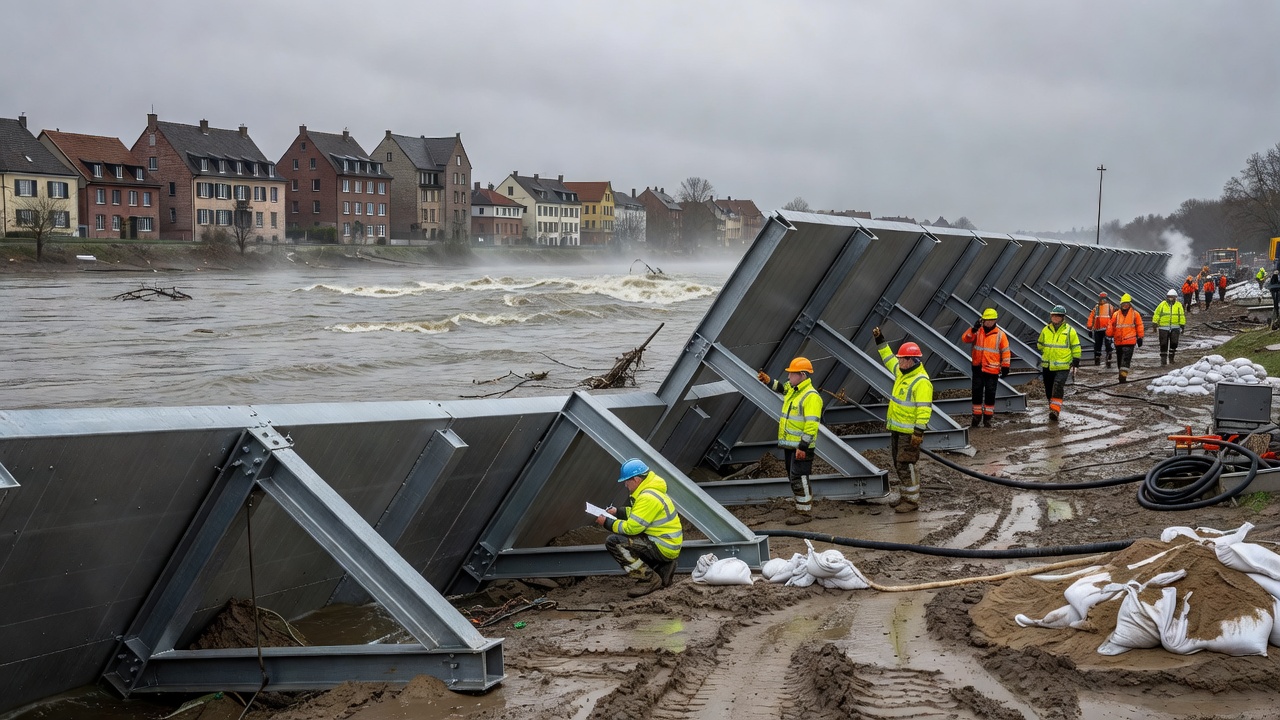
Authorities in the Rhineva River Valley have completed initial reinforcements to flood barriers damaged during last month's severe storm. The upgrades address erosion and structural weaknesses exposed along key sections of the river. Local officials report that work began immediately after water levels receded and is now 70 percent complete.
Storm Damage Assessment
The storm brought record rainfall and winds exceeding 80 kilometers per hour, causing overtopping at three barrier sites near the towns of Elmsford and Riverton. Engineers documented cracks in concrete walls and loss of riprap material totaling 1,200 meters. No fatalities occurred, though several farms experienced minor flooding. A post-event survey by the Rhineva Valley Water Authority identified the need for higher crest elevations and improved drainage channels to handle future events projected under updated climate models.
Residents in low-lying areas received temporary sandbag support during the emergency phase. Cleanup crews removed debris from 15 kilometers of riverbank within ten days. Data from monitoring stations showed peak discharge rates 25 percent above previous records, highlighting the increasing intensity of weather patterns affecting the valley.
Reinforcement Measures Implemented
Contractors have installed steel sheet piling along vulnerable stretches and added geotextile layers beneath new rock armor. The project uses locally sourced materials to reduce transport emissions and employs 45 workers from nearby communities. Completion is scheduled for early next month, ahead of the autumn flood season. Officials estimate the upgrades will provide protection against a one-in-100-year event, an improvement over the previous one-in-50-year standard.
Funding comes from a combination of regional government grants and European environmental resilience programs. Future phases include sensor networks for real-time water level monitoring and vegetation buffers to stabilize banks. Community meetings have been scheduled to review progress and gather input on additional safety features. These steps aim to minimize economic losses from flooding, which previously averaged 4 million euros annually in the valley.